There are bins near the entrance to Gelfield, for removal of waste. The Parish pays for this council service. However, these are not sufficient in size or infrequently emptied, they do overfill quickly. Following guidelines, we have created a composting area that maximises the benefits of composting.
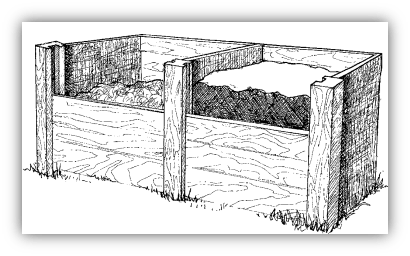
We have chosen a similar design to the featured picture above. Made from planks of wood screwed together into a simple box which can be three or four sided. Pallets, which allow more air, make good compost bins. Pallet compost bins give many access points for animals such as hedgehogs or slow worms. They are easy to construct by driving stakes through the pallet. Pallets come in standard sizes so fit together well. Building two bays to your compost bin allows one bay to be actively filled over the growing season whilst the other bay is left to compost. In the autumn empty the composted side. Put any material which has not composted into the second bay and start to fill the now empty first bay with grass cuttings. An ideal gardener’s compost heap contains a mix of material: grass cuttings, coarse grass, dead leaves, and cardboard. It should be turned at least once or twice a year and can produce compost quickly. By contrast a compost heap in a burial ground is there to get rid of unwanted waste and to provide a haven for wildlife. Do not worry if there is not the ‘correct’ mix of materials
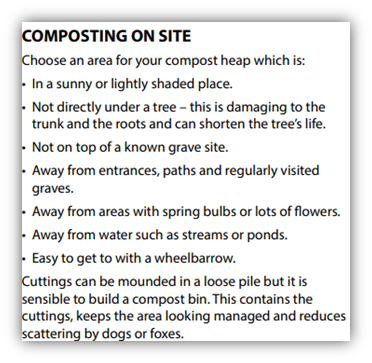
Although the area is partially shaded, we have situated the compost heaps within Gelfield, and cleared the spot in front of the slate house, which was becoming untidy.
 Historic Saddleworth Church