
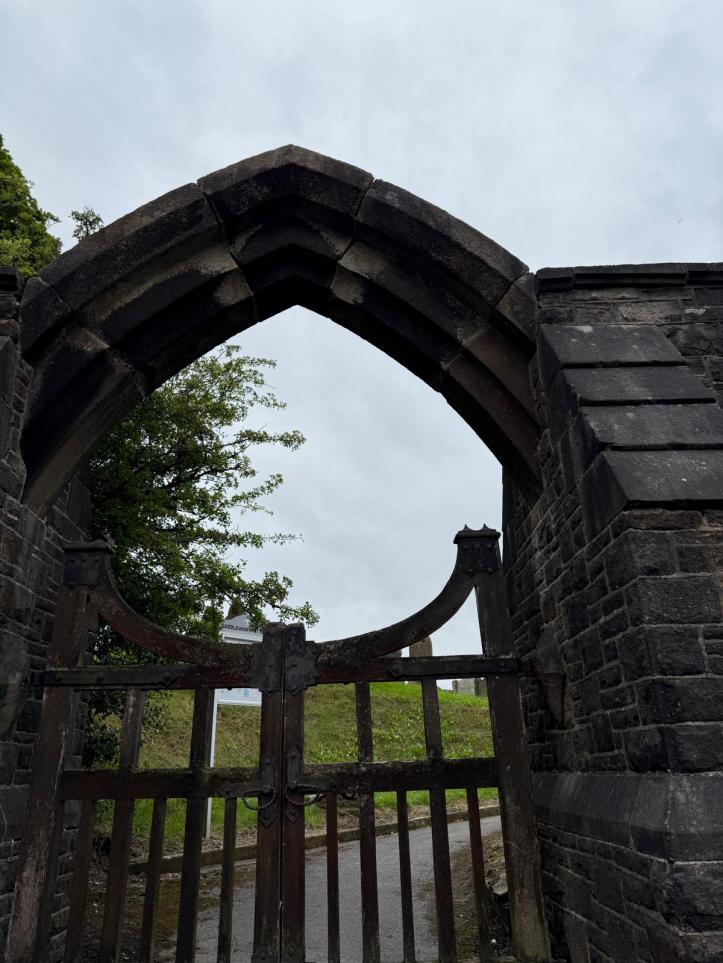
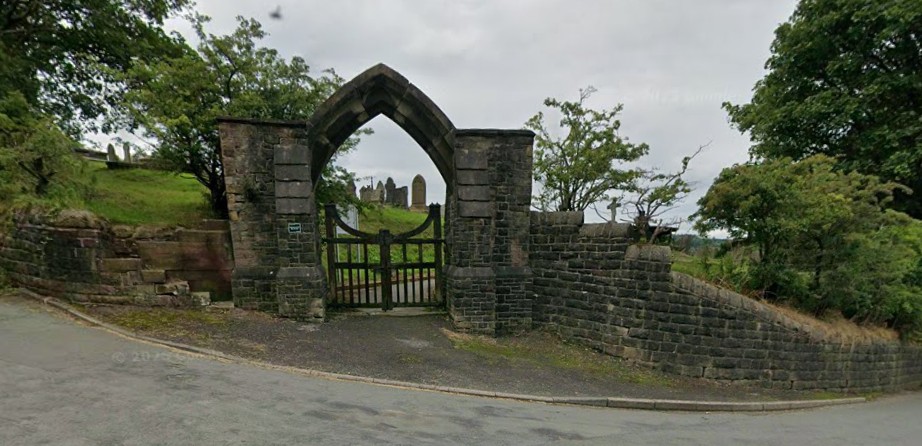
At the top of Church Road, before the turn to Saddleworth Church stands the Old Lychgate, a welcoming symbol of history and remembrance.
The adjacent link, is to a Tik Tok published by the.history.fox (Ben Fox) which provides a potted history of the Lychgate found at the entrance to many old English Churchyards.
Through the Lychgate is the New Yard. This is a centuries-old site where generations of local folk have been laid to rest. In which, visitors may have noticed a significant transformation over the last three years. Saddleworth Church and various other benefactors have generously been funding the clearance of this yard.
The continued preservation of this and our other yards ensures these sites stay;
- safe and accessible to the public
- a vital link to local history and family heritage
- a space for reflection, remembrance and community
Donations have also helped us to make a significant impact on the Lower Yard.
We have also had assistance from Saddleworth Musuem and Saddleworth Historical Society, along with Oldham Archives. Helping us to improve how we share our history with the wider community.
We have also been granted £2000, for remedial work to some of the trees. Kindly given by the Duchy of Lancaster Benevolent Fund.
Over the years, myself along with other volunteers have consistently been digitising the Parish Burial registers. Creating an index nearing 23,000 names, linking each name to a plot. The primary purpose being to help families in tracing descendants. Then assisting with the burials of loved ones in their ancestral plots. They are very much working churchyards. Secondary, is collating information from various sources, which enables the telling of stories about the people who are buried in the yards.
This led to the creation of this website, so that stories are not lost but shared with the community.

Our work has identified that there are 13 plots in the care of the Commonwealth War Graves Commission (CWGC). There are also many additional memorials to people who are buried abroad, also registered with the CWGC. It is our Indexing project that is helping us to identify each plot.
We recently applied for a commission sign, which is a little small, but nonetheless meaningful. This coincided with a presentation given by the CWGC during heritage week 2024. We have also taken advice from the RSPB, regarding the landscape and managing natural habitats, flora and fauna. This has been very useful in regard to implementing guidance, our website provides more information on this.
Protecting community spaces and caring for our landscape effectively means continued maintenance. We are seeking support to sustain this work. Safeguarding the churchyards, the lychgate, and the stories they hold for generations to come.
Funding pays for the clearance of pathways, access to plots, stability of structures.

Please SCAN the QR code to gift directly to the Churchyard. Help us to keep the yards open for everyone.
Read further for some more history on the churchyards.
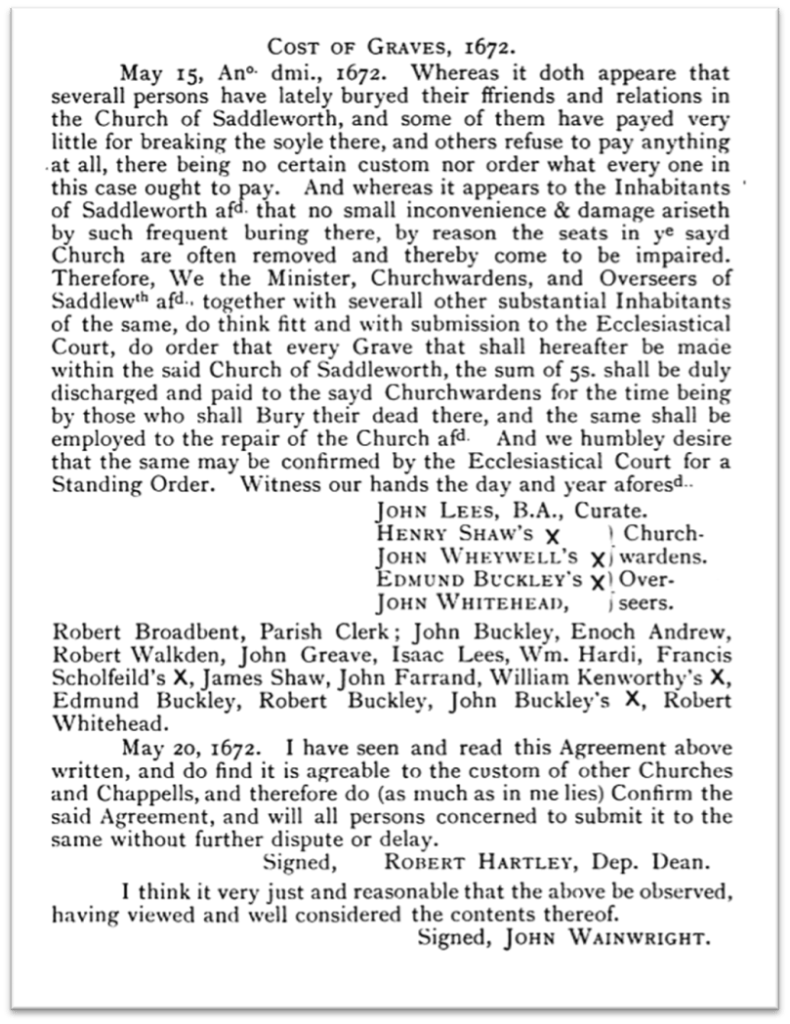
(Lower Yard) In 1824 the Vestry authorised the purchase of a plot of ground, part of Church Bank Woods, for £200 which was fenced round, surveyed and divided into grave plots. Edward Brown Solicitor of Dobcross, received various amounts making £296 13s for land and conveyance. The plan was in existence in 1915 but recorded as torn and almost illegible. A new tracing of it had been made before the identity of some of the graves became forever lost. Joseph Shaw paid for surveying and planning at a charge of £3 11s.
These artifacts have yet to be tracked down, but we are working on it.


All the while, the Hearse house was rebuilt. A grade II listed building, showing the date, the names James Taylor, George Ogden identified as Wardens with the further inscription Know thyself (in Greek) on a stone arch in the gable. Ashlar with water shot stone sides and rear and graduated stone slate roof. Which incorporates 2 hearse bays each with pointed arch doors. Having a coped gable with carved finial. Pointed arch windows to sides and rear, the rear one retaining interlaced glazing bars. (as recorded in the Historic England listing)
(Edit 11/11/2025) at the very top of the building stands an Elizabethan Finial which was taken from the Old Porch.

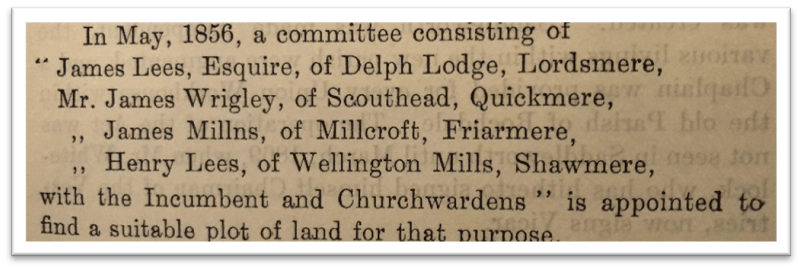
The new Cemetery (New Yard) it was reported, that between 1824 and 1856 that there had been a great number of funerals, and all the available spaces had been taken in the new graveyard. Further provision was to be made in May 1856. In November, £200 had been raised by a church rate to purchase 3 acres, (Glebe Fields) and that £250 for walls to enclose it, £30 for consecration fees and law expenses to be raised
 Historic Saddleworth Church