
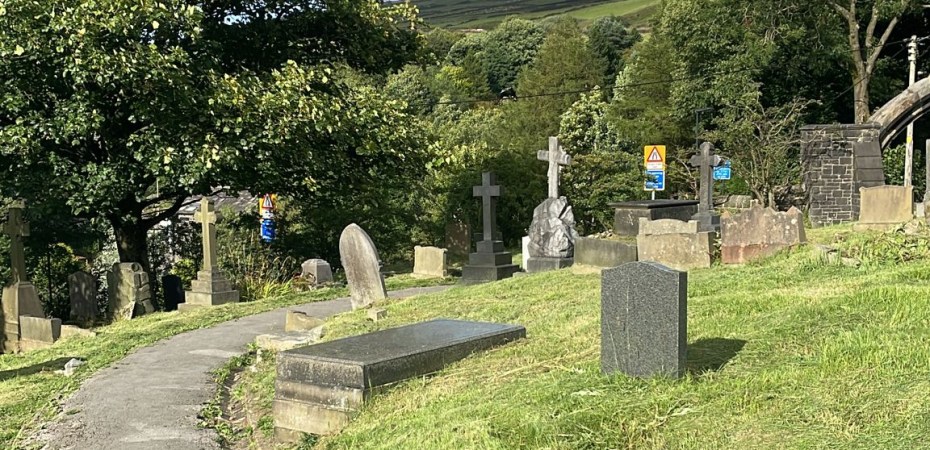
For those in the know, cutting grass and ground clearance is not as straightforward as mowing a lawn, it can be quite technical, especially so, in a churchyard. The terrain in a churchyard often presents unique challenges requiring careful consideration and precision. Factors such as ancient tombstones, delicate landscaping, and uneven ground make the task of maintaining the churchyard quite intricate. Our primary aim is to preserve the historical integrity and solemn atmosphere of the churchyard while ensuring it remains a peaceful and well-kept space for reflection and remembrance.
Clearing Vegetation
It is essential to keep the vegetation around monuments in check to facilitate the assessment and mapping of the condition of our churchyards. Overgrown vegetation can obscure potential hazards such as loose sculptures, unstable structures, and deep holes, posing risks to both visitors and the monuments themselves.
When removing vegetation from monuments, it is crucial to do so with great care to avoid any accidental damage and to preserve the wildlife habitats that are created by the vegetation cover. This delicate clearance process requires meticulous attention to ensure the safety of individuals and the integrity of the monuments.
We have successfully undertaken clearance efforts in the New Yard, effectively removing a plethora of Willow Herb, Brambles, Ferns, and Himalayan Balsam. Concurrently, clearance activities are underway in the Lower Yard, demonstrating our commitment to maintaining these spaces.
Notably, Japanese Knotweed has not been detected in any of our churchyards. Nevertheless, regular inspections are indispensable to verify this and to remain vigilant against its potential presence. Additionally, it’s important to exercise caution when importing fill materials, as they can inadvertently contain knotweed, necessitating thorough oversight and preventive measures.
Ground Clearance and Levels
The upkeep of the churchyard is of utmost importance, particularly with regards to maintaining a level and clear surface for visitors. While remarkable improvements have been made in the New Yard and Gelfield Lane, it is evident that the Lower Yard presents challenges with overgrowth and uneven terrain, posing potential risks to visitors and complicating access to the plots. Volunteers have commendably taken on the task of addressing these issues, and their efforts in the Old Yard are praiseworthy.
The presence of deep depressions due to ground settlement further underscores the need for ongoing maintenance. By redistributing consecrated churchyard soil and carefully addressing the ground settlement through a thoughtful program that involves uncovering memorials and infilling, the volunteers are contributing immensely to the preservation of this sacred space. It is heartening to see such dedicated teamwork in action, and it gives hope for the continued enhancement of the churchyard for the benefit of all who visit.
Caring for Grassland
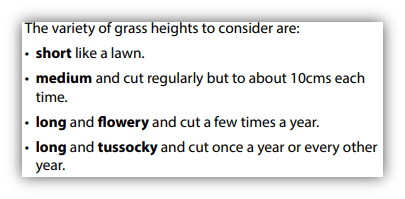
Deciding how to manage the grassland is a multifaceted endeavor that requires considering various factors such as soil type, water availability, and local climate conditions. It is one of the most important decisions to be made for the ecological balance of the area, and as such, it demands careful thought and meticulous planning. Introducing a mosaic of grass at varying heights not only adds visual interest to the landscape, but also plays a crucial role in creating diverse habitats for different species of wildlife. This diversity in vegetation provides shelter, food, and nesting opportunities, thus fostering an environment where wildlife can flourish and thrive.

Short Grass
- Looks neat and cared for and allows people to visit the whole site easily
- Makes it easier to read memorials
- Helps ground feeding birds such as Thrushes and Wagtails
- May contain wild flowers close to the ground (Wild Thyme or Self Heal for example)
- Can have rare grassland fungi which are able to push through the short grass
- Needs regular mowing requiring mowers! volunteers prepared to do the work, or donations to pay for it.
Medium Grass
- Fairly easy to manage as it can be cut with a robust mower
- Does not need such regular mowing as short grass so fewer resources are required
- May contain some low-flowering plants such as Clover, Bird’s-Foot Trefoil, Self Heal
- Flowers attract insects (Bees in particular if Clovers are present), other invertebrates, small mammals and reptiles such as Slow Worms
Medium grass should be occasionally mowed and cuttings removed. This can be cut with a mower with the blade set at about 4 inches (10cm). It requires less frequent mowing (probably monthly during the growing season).
Long Grass
Is likely to contain more plant and animal life, though a spring meadow looks nice, it does make the terrain tricky to navigate. Areas should be set aside within the plan to maintain the benefits. As there is some considerations when cutting and removing. These areas should have an element of control such as separate areas for spring flowers and another for summer flowers with a regime for cutting either section when necessary. Which means these areas can be left for a period of 12 to 16 weeks. Allowing most of the plants to grow, flower and set seed though we should not delay the cut too long as this affects future growth. Cutting after the end of August leads to the strength of the grasses being stored in the roots. Over time the sward will become rank, tussocky and lose wildflowers.
Nettles
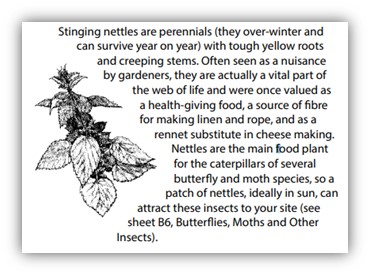
Acknowledging that it is ideal for nettles patches to be present, we should limit the spread through careful and strategic management. Therefore, we should cut before or during flowering then dig up with a fork and remove the rootstock as thoroughly as possible to prevent regrowth. Additionally, the rootstock can be exhausted by repeated hoeing and pulling out of roots, providing an effective method for ongoing maintenance. It’s important to note that nettle seed can lie dormant in the soil for up to 5 years, highlighting the long-term nature of its presence. As we aim to maintain a balanced ecosystem, our intention is not to eliminate nettles entirely, but rather to keep them contained close to the boundaries, away from areas of public footfall. This approach ensures that the nettles can continue to fulfill their ecological role while minimizing potential interference with human activity.
Ivy
Ivy is great for bees and other insects and can contain birds’ nests and roosting bats. It can also protect stonework from wind, freezing temperatures, erosion, and airborne pollution. However, it can be damaging to memorials with joints or cracks and may need to be removed or trimmed regularly.
Ivy can be a resilient plant, often requiring various methods for its management depending on the surface it has latched onto. When dealing with ivy on trees, it’s essential to carefully cut the stem at the base of the tree, allowing the severed section to wither and die above the cut. However, when ivy intertwines with stonework, a different approach is necessary to prevent damage. It’s crucial to avoid cutting the ivy, as this can lead to the plant rooting further into the stonework, potentially causing structural harm. Instead, the ivy should be gently coaxed away from the support, starting at the top where the younger, more resilient stems are typically attached. Carefully peeling the ivy off and either digging out its roots or repeating this process annually can help maintain the integrity of the stonework. In some cases, it may be desirable to retain a certain amount of ivy for aesthetic or ecological reasons, in which case regular trimming is necessary to prevent unchecked growth. However, it’s important to avoid disturbing nesting birds, making late summer through early spring the ideal time for such maintenance. When dealing with ivy on an old wall, extra caution is required, as the ivy itself could be providing support to the structure. Trimming the ivy back to the stone is advisable, but removing it entirely could compromise the wall’s stability. Regularly assessing the impact of ivy growth is crucial to determine whether removal or further control measures are necessary, ensuring the preservation of the surrounding environment.
However, it can be agreed that Ivy does add an atmospheric quality to our churchyards. The lush greenery of the ivy climbing up the old stone walls creates a sense of timeless beauty and serenity. As the ivy weaves its way around the ancient gravestones, it brings a touch of nature to the solemn setting, softening the harsh edges of the weathered monuments. In the changing seasons, the ivy takes on a different character, with vibrant leaves in the spring and summer, and a more subdued, earthy tone in the autumn and winter. Its presence not only provides a picturesque backdrop for the churchyard, but also serves as a habitat for birds and small insects, contributing to the biodiversity of the area.
How can you help
If you are local to the area and would like to help, then please get in touch. Volunteering has many benefits. Whether it’s contributing to the upkeep of the green spaces, assisting with community events, or participating in local initiatives, there are numerous ways to get involved and make a positive impact. Additionally, if you are unable to volunteer your time, a donation is always appreciated to help cover the costs of maintaining such a large public open space. Your support plays a vital role in preserving this valuable community resource for current and future generations to enjoy.
 Historic Saddleworth Church