
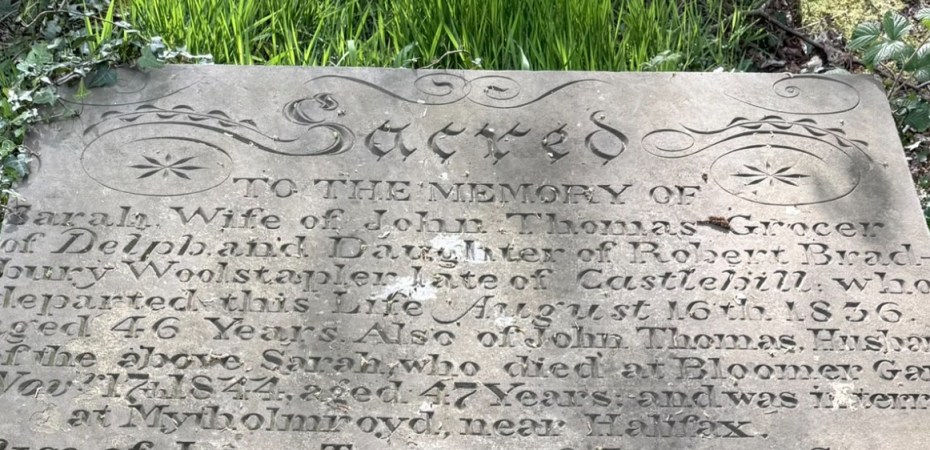
In a quiet corner of the lower yard, where leaves murmur and the wind moves softly through the stones, an inscription rests almost unnoticed. Yet, when you pause long enough to look beyond the surface, this modest marker opens a doorway into a far wider world of human stories. A single line on a Saddleworth gravestone reaches across continents to a maritime disaster thousands of miles away—a ship fighting for days against the violent seas of the Bay of Biscay.
Families once walked the same streets we know today. James and Sarah Ann Thomas, their children, and their servant from Haworth were swept into a global tragedy that few now remember. This is the quiet magic of our churchyard and archive work: ordinary stones revealing extraordinary lives.
Gravestone Inscription
*Sacred TO THE MEMORY OF Sarah, Wife of John Thomas, Grocer of Delph, and Daughter of Robert Bradbury, Woolstapler, late of Castlehill, departed this Life August 16th 1836, aged 46 Years. Also of John Thomas, Husband of the above Sarah, who died at Bloomer Gate Novr 17th 1844, aged 47 Years, and was interred at Mytholmroyd, near Halifax.
Also of JAMES THOMAS of LONDON, Son of the above, and of his Wife SARAH ANN, and their Children ANNIE MARY, and WILLIAM BRADBURY, and their Servant ELIZABETH HARTLEY of Haworth, who were all on board the Steamship London when she foundered at Sea 11th January 1866.
Overview of the Steamship London
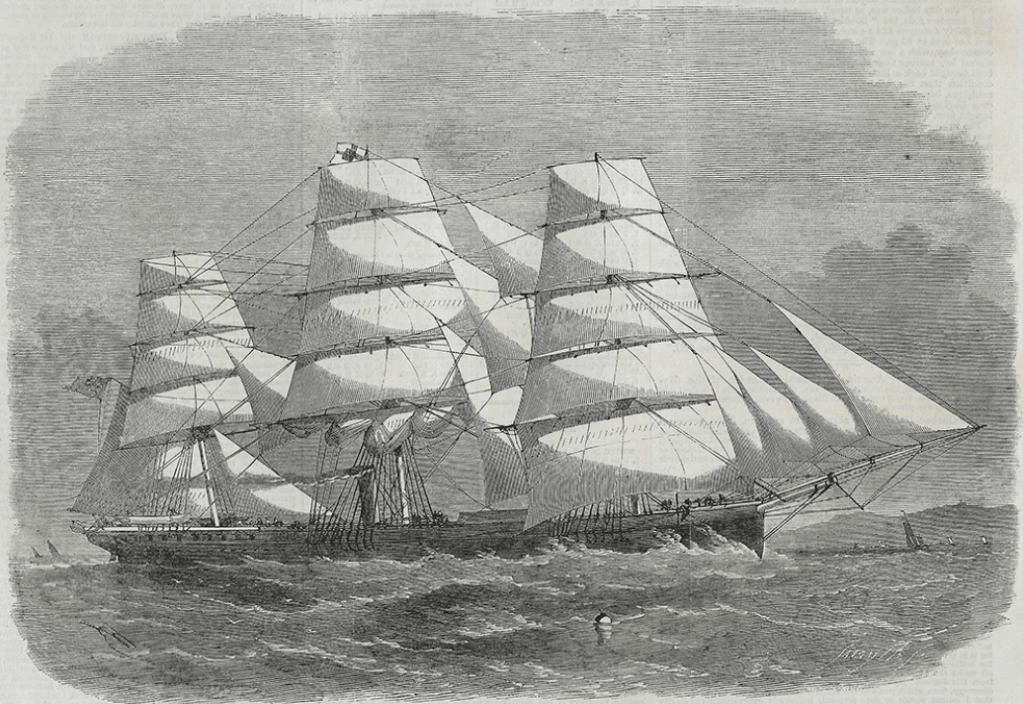
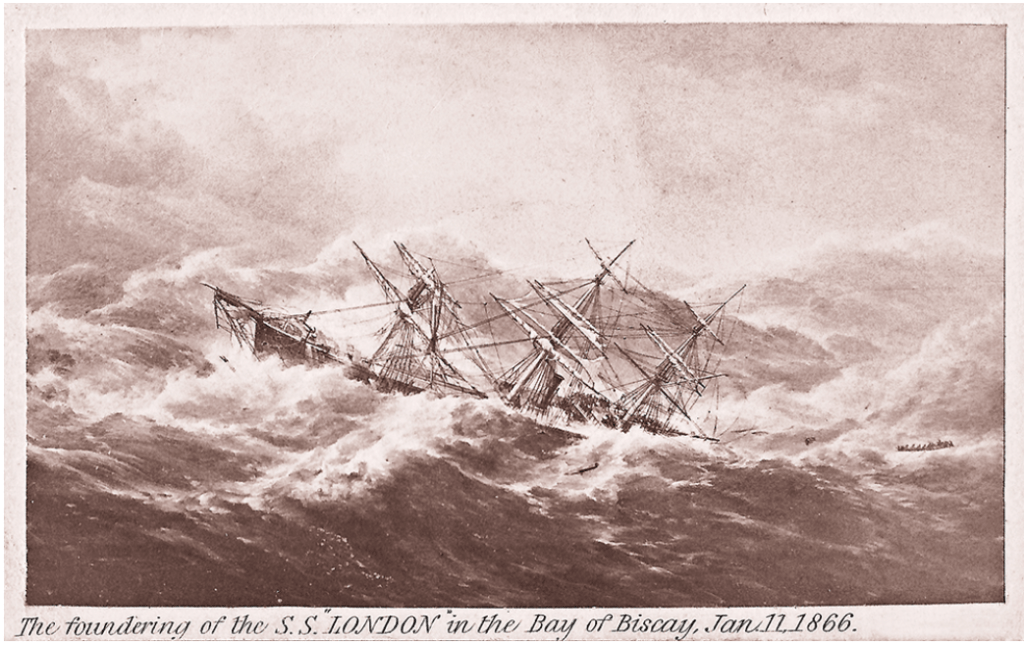
The SS London was a British passenger steamship built in 1864 by Money Wigram & Sons. Intended for the London–Melbourne route, she combined steam propulsion with full sailing rig. On her third voyage she encountered a violent Bay of Biscay storm and foundered on 11 January 1866, with only 19 survivors out of more than 260 people aboard. When leaving Gravesend on 30 December 1865 bound for Melbourne, the seamen reportedly warned ‘She’ll never rise to a stiff sea’ the ship was already sitting low in the water due to heavy cargo.
The tragedy became one of the most widely reported maritime disasters of the Victorian era.
The Final Voyage
- Departed Gravesend: 30 December 1865
- Took on additional passengers at Plymouth (taking on more passengers. 263 including 6 stowaways)
- Entered the Bay of Biscay in early January
- Encountered a severe storm that lasted nearly three days
- Masts were carried away, a lifeboat smashed, and the ship began taking on water
- Cargo shifted, worsening the list
- Engines were eventually extinguished by flooding
- The ship became unmanageable and sank stern‑first on 11 January 1866
Testimonies and Reporting
There is a rich source of storytellling about the shipwreck and ultimately the legacy of the disaster. Contributing to public pressure for improved ship stability standards, debate over overloading and cargo distributon. There were calls for increases in lifeboat capacity. The tragedy remained in public memory for decades and is still referenced in maritime history.
1866: Horror at Sea – the loss of the SS London – dawlish chronicles (Exract below)
Samuel Plimsoll (1824-1898) is one of the forgotten heroes of the 19th Century and for many years he campaigned inside and outside Parliament for compulsory standards of marine safety. One of the cases which drew attention to this need was provided by the loss of the London in 1866, a disaster which received wide publicity in its time, and which also casts and interesting spotlight on Victorian values and behaviour.
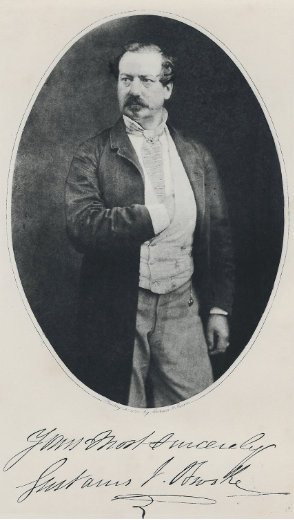
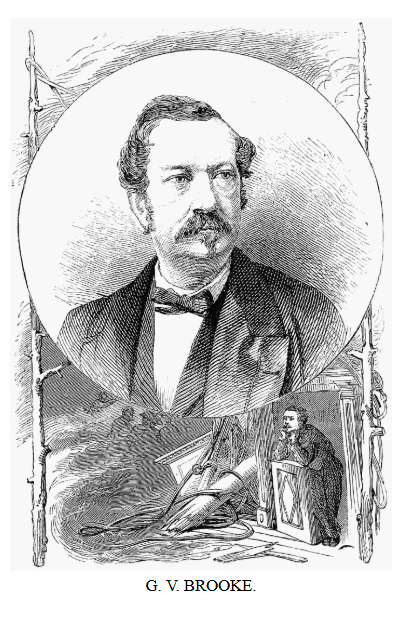
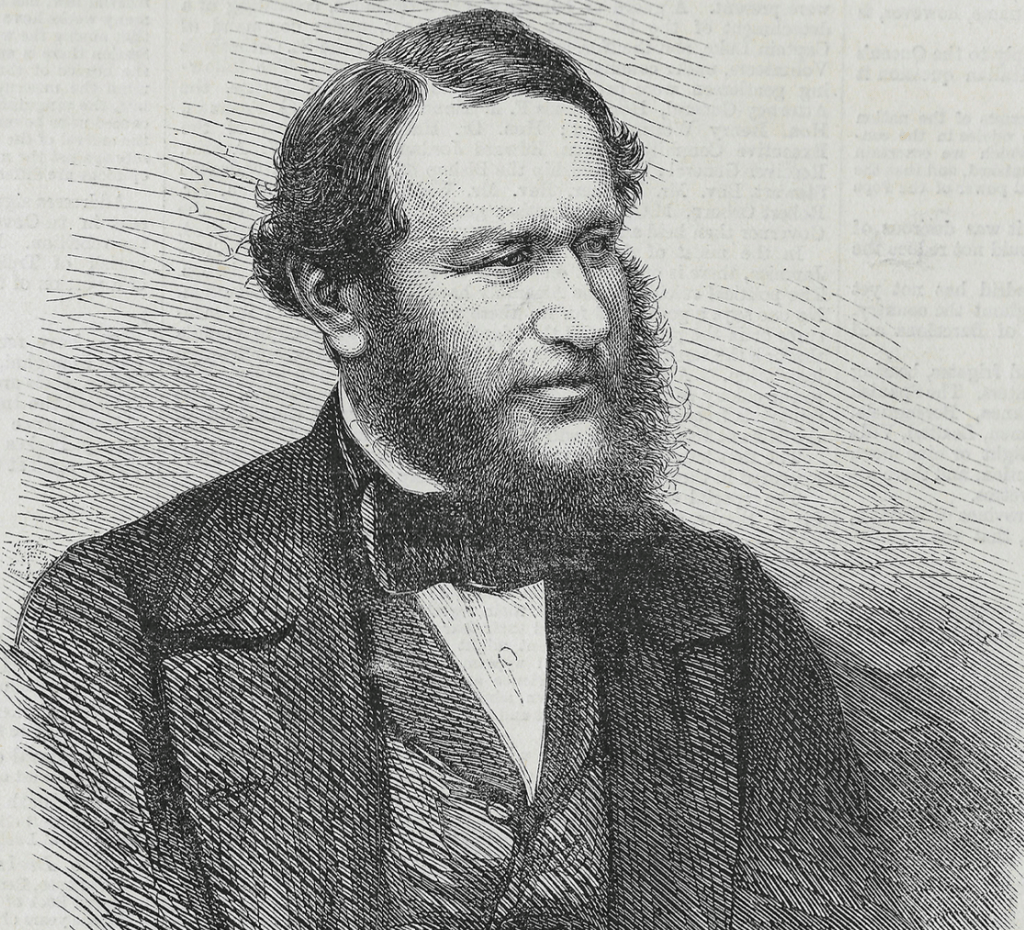
One passenger who was to give a heroic example was a famous actor of his time, Gustavus Brooke (1818 – 1866) who had been successful in Britain, Ireland and the United States. Of great strength, he laboured unceasingly at the pumps. According to one source Brooke, “dressed only in a red Crimean shirt and trousers, bareheaded and bare footed, worked until work was useless. When last seen, about four hours before the ship went down, he was leaning calmly on one of the half-doors of the companion(way), his chin resting upon both hands … while he watched the scene with grave composure.” Men have had worse epitaphs.
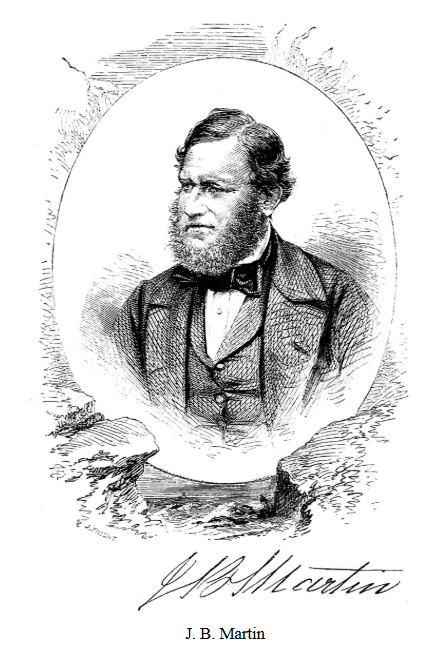
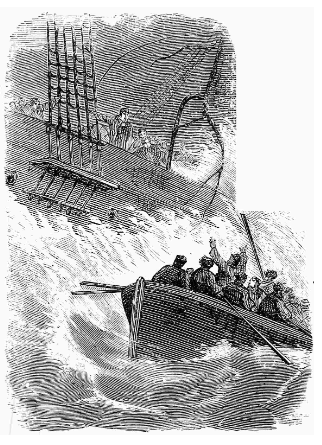
By early afternoon the London was sinking rapidly. Life boats were swamped and lost no sooner than they were launched. Captain Martin ordered the ship’s engineer, Greenhill, into one of the last boats with the words “Your duty is done. Mine is to remain here.” When the boat was lowered the captain was again asked to enter it but he replied “No! I will go down with the passengers but I wish you God-speed and safe to land”. He threw in a compass to the boat and shouted “North North-East to Brest” as their course.
Greenhill’s boat was scarcely eighty yards from the London when she took her final plunge. The stern went under, the bows rose briefly, the crowd on deck was overwhelmed and the remaining boat, full of people, was dragged down in the vortex. Greenhill now had the task of bringing himself and eighteen others to shore, three of them second-class passengers. No first-class or steerage passengers had been saved. After a storm-tossed day in the open boat, and not-sighted by a vessel that passed close, they were finally picked up by an Italian vessel, the Marianopole, and taken to Falmouth.
The death-toll was 244.The customary Board of Trade enquiry followed. It identified that a major contributory factor to the London’s loss was that she was overloaded with the 345 tons of railway iron and that the coal stored on deck had blocked the scupper holes, which preventing water taken on to be drained off quickly. The protracted horror of the London disaster made no less an impact on public opinion than the high death-toll. Funds were set up to help the bereaved, and, as was inevitable after all such events of the era, the Scottish poet William McGonagall wrote epic verse about it.
Wreck of the “London.” by Anonymous | Project Gutenberg Extract Below
The Passengers
A gentleman, who knew most of the passengers on board, when he heard of the catastrophe, remarked, that it would throw half Melbourne into mourning. Doubtless it will, and into how many other places besides will not the news of the catastrophe carry mourning? That one poor Bavarian, those two hapless Danes, had they no friends in the world to shed a tear over their watery grave? We dare not forget that each one, as he embarked, carried within him, as it were, a very world of varied interest, and that the hopes and sympathies of the unknown and poor were as precious and beautiful to those who knew and loved them, as were the plans and fortunes of the well-known and wealthy to the circle of which they formed part. Every death we see recorded should bring before us, in imagination, a bier, around which we see gathering a collection of mourners, refusing to be comforted, because their loved one is not. When we hear of a multitude of persons perishing in some dread calamity like the present, we must remember that, while all died together, each died alone, and will be mourned as if he alone had died. More than two hundred individual worlds of thought and feeling, of sympathy and design, went down beneath the ocean wave on that wild stormy afternoon. Each of these worlds was perhaps the very sun of other worlds, that will now receive a sudden and awful shock. Many men, many poor men even, so live that they are centres of operations which, although not brilliant in the world’s estimation, are of the deepest possible interest to all concerned in them, and when they die, it is as if the sun had been removed out of its place.
Nor do we forget, as we take up the list of passengers who went out in the London, that every one had a separate and solemn history. We do not forget that the issues of life were unspeakably important, not only to all, but, in a very solemn manner, to each—to the poor Danish sailor as well as to the Oxford scholar: we do not forget that to each one on board, this question was proposed amid circumstances most appalling, “What shall it profit a man if he gain the whole world and lose his own soul, or what shall a man give in exchange for his soul?” We dare not forget the infinite value of every soul on board.
As, during the week which followed the mournful announcement that the London had foundered, we looked each day into the first column of the Times, or as country newspapers reached us, we tried more and more vividly to realize how much that list of the drowned meant, and how names that we had read confusedly amidst a mass of others, became eloquent with interest as we caught snatches here and there of the life-history belonging to them. But we have no doubt that there was not one on board whose history was completely destitute of interest and charm, to some few at least, and that tears have been shed for many who were nothing more than plain, humble people, getting an honourable living by the sweat of their brow, and who will find no biographer to tell the unassuming story of their lives. In the scores of shipwrecks that occur every year, the worthy unknown should not be without the sympathy, if they are shut out from the recognition which well-known names immediately demand. Of late years, perhaps, if we may judge from the newspapers, from letters which have reached us, and from interviews with friends of the deceased, there has not often been a wreck in which such a variety of characters had each to act a most solemn part. On board the London there was life beginning and life ending in the aged and the young who were going out to the new land. There was the competence which had come after arduous and successful toil, and there was the poverty whose only capital lay hidden in its hopeful industry: there was the lawyer and the divine, the merchant and the engineer, the man of letters and the rude brawny artisan; the actor and the banker; the experienced traveller and the humble villager from Cornwall. Something of the varied life of the world at large lay mirrored in that vessel that was preparing to steam away from Plymouth. The brief notices of deaths which appeared day after day revealed dark depths of sorrow, into which one was almost afraid to look, tragedies enacted full of horror unspeakable.
Let us glance for a moment at those of whom we know nothing beyond their names, before proceeding to notice those whose position in society and whose well-known histories speedily found biographers.
On the 11th inst., lost at sea, on board the steamship London, James Thomas, Esq., late of London, formerly of Huddersfield, Yorkshire, together with his beloved wife and two children; also Elizabeth Hartley, for many years a most faithful servant of the above.
On the 11th inst., lost at sea, in the steamship London, aged 23, John Ruskin Richardson, youngest son of the late John George Richardson, Esq., many years a resident of Sydney, New South Wales.
On the 11th instant, in the steamship London, in his twenty-first year, Archibald, seventh son of Hellen Sandilands, of 56, Belsize-park, and of the late John Sandilands of Conduit-street.
On the 11th instant, lost at sea, in the steamship London, on her voyage to Melbourne, Gilbert Andrew Amos, Esq., Police Magistrate and Warden, Heidelburg, Victoria, and third son of the late Andrew Amos, Esq., of St. Ibbs, Hitchin, Herts; also, at the same time and place, Isabella Dick Amos, wife of the above; also, at the same time and place, Miss Catherine McLachlan, aged 22, sister of the said Isabella Dick Amos.
On the 11th inst., in the steamship London, on her voyage to Melbourne, Edward Youngman, Esq., aged 44, greatly beloved and regretted by a numerous circle of friends.
On the 11th inst., lost at sea, in the steamship London, George F. P. Urquhart, Esq., of Evandale, Auckland, New Zealand, and Mary Chauncy, his wife, late of 11, Kensington-park Villas, W., daughter of the late Major James Burke, of the 77th and 99th Regiments, of Arlaman, county Limerick, Ireland.
These are only a few instances out of many that might be given; but now to look at names, well known, take first the story of the Cumberland emigrants.
It appears that no less than ten persons who went out in the London were connected with Cumberland; one family, consisting of William Graham, his wife, and three children, having gone from Carlisle. It is a sad story—one which cannot be read even by strangers without the most sorrowful feelings. William Graham, tailor, aged 51 years; Ellen, his wife, 49 years; George, his son, 10 years; a daughter, 3 years; a baby, aged 4 months; Thomas Graham, aged 40 years; Mary, his wife, aged 27 years; David Graham, aged 37 years; David McVittie, aged 30 years, blacksmith, Newtown; and John Little, aged 30 years, fireman on the North British Railway. The three Grahams were brothers. Thomas had been out in Victoria twelve years, and David followed him four years afterwards, and had since been engaged in business with him. Success followed their farming operations, until they were enabled to purchase an estate. In their prosperity the brothers were not unmindful of their old home, and during the prevalence of distress at Longtown, in consequence of the cotton famine, they generously sent over a sum of 60l. for the relief of the sufferers. They also sent a large amount of relief to Manchester. In August last they came to England, with the view of seeing their friends, and of purchasing implements. Upwards of 1000l. they laid out in this way, and sent out before them a variety of implements for the farm. Thomas had another purpose to effect, also, in visiting the old country, and that was to marry, and take home with him a wife. He married Sarah Bruce, a native of Banff, and they were married only a week before they left Carlisle to take up their berths on board the London. Their brother, William Graham, agreed to go out with them, they paying his passage, and he took with him his family, as stated above. Little and McVittie, friends of the Grahams, were also going out with them. Both men were in the employ of the North British Railway Company, Little as fireman, and McVittie as a blacksmith. Little was a remarkably steady and amiable young man. He was the eldest of a family of eleven children, and is survived both by his father and mother. The whole party of emigrants left for London on the 27th of December last, and a large number of friends assembled to bid them farewell, and three hearty cheers were given as the train started. Such were ten at least who had each a history inestimably precious to a wide circle of friends at home and abroad, and, simple though these people were by the side of more brilliant names, there is a quiet naturalness about their story that will appeal to many hearts.
On board the London also was Mr. Henry John Dennis, a gentleman of some note in Australia and America. A few years ago Mr. Dennis narrowly escaped shipwreck in the Marco Polo, a vessel that in speed and celebrity used to compete with the Suffolk when Captain Martin commanded her. In the middle of the night, in the Southern Ocean, the Marco Polo struck an iceberg; but on that terrible occasion Mr. Dennis had been of some service. He had since been a very active colonial explorer, and had for many months been engaged in a hazardous hunting expedition in the wild regions and among the savage tribes which lie at the back of Port Natal. He is understood also to be the first, if not the only Englishman who has grown cotton in the Southern States of the American Union by free negro labour. Starting for America while the civil war was at its height, he took a plantation on the Mississippi, and though he had to cope with plundering bands of guerillas and with many other dangers and inconveniences, he nevertheless succeeded in raising a crop, and only retired when he found that in the then existing state of things it was utterly impossible to grow cotton without great pecuniary loss as well as personal risk.
There was a clergyman on board, distinguished for his many and varied gifts, and who was beloved by a very wide circle of friends, both in England and Australia, the Rev. Dr. Woolley, to whose worth and talents Dean Stanley and Sir Charles Nicholson, formerly Speaker of the Legislative Assembly of New-South Wales, have paid the very warmest tribute, as, indeed, have a host of the scholarly and worthy of the land. Dr. Woolley was in the 49th year of his age, and his course in life had been one of usefulness and honour in the branches of learning to which he had specially devoted himself. His life had been that of the Professor rather than of the working clergyman. He matriculated at University College, London, but subsequently removed to Oxford, where in 1836 he took a first-class degree in classics. On leaving Oxford, he became successively Head Master of Rossal School, in Lancashire, and of King Edward’s Grammar School at Norwich. This last office he relinquished on obtaining the appointment of Professor in 1852, in the University of Sydney, which had just been incorporated under an Act of the local Legislature. His duties in this new position were most important, as upon him devolved the organization and successful working, under circumstances of great difficulty, of a great national institution. But he threw himself into the work cast upon him with enthusiasm, and laboured with untiring zeal and energy. He succeeded in a very marked degree in winning to himself and moulding the taste and character of the young men placed under his control. The gentleness—almost feminine—of his nature, the warmth and generosity of his heart, his distinguished attainments as a scholar, and the eloquence and earnestness with which he was wont to impart instruction, not only to the Undergraduates of the University, but to the members of various popular institutions with which he was connected, have been tenderly spoken of, and will be long remembered by hundreds of persons. He came to this country a few months ago for rest, and very pleasant to himself, and to those who knew him, was his brief sojourn here. From many, as we at least read the matter, there came tempting inducements to settle down in England among associations more consonant with a refined taste than those of colonial life; but with him, too, the mainspring of life was obedience to duty, and he must return to the work waiting to be done by him. He had been exceedingly happy here. A writer in Macmillan says that one who saw him during his latest days in England writes of him thus:
“His tastes were those of a refined and cultivated man. He told me that his stay here, mixing in the society of men of letters, had been a delight to him beyond what I, who was always in it, could conceive. Had he met Tennyson and Browning, nothing could be more to his taste than the companionship of such men, with whom his own qualities made him a most welcome guest. He had in perfection the bright, gentle, cheery manner that characterizes the best Oxford man. In stature he was small, but his face most pleasant to look at. He was very active in all sorts of societies and institutions for the benefit of working-men and men engaged in business. His age must have been about fifty, but he looked younger. He had a wife and six children waiting his return to Sydney, whither, as I perceived, he was determined to go, for he felt his work lay there, and his duty. He went back to fulfil his duty, and has fulfilled it. He is remembered by many whom he left in England as the good man—John Woolley.”
There was another passenger of celebrity on board—Mr. G. V. Brooke. He was of respectable family, and some members of it were highly distinguished in literature. In early boyhood he had been a pupil of Lovel Edgeworth, the brother of Maria Edgeworth. His father, who was an architect, had other views concerning him than those which the son lived to fulfil. He was educated with a view to the bar; but while quite young he was thrown amongst those who were devoted to private theatricals, and he was so captivated that he relinquished his law studies and applied himself to theatrical pursuits. He met with some successes, and many reverses, particularly in Australia. Of all places in the world, after his many ups and downs in life, on the morning of the 6th January he was on board the London, and his sister was with him.
Messages in bottles discovered
- On the 12th of February last three bottles were found on the coast of Guiberon and Locruariaquer, containing six papers written in English, as follows:
- D. W. Lemon, London, Thursday, 10th January 1866. The ship is sinking; no hope of being saved. Dear parents, may God bless you, as also me, with the hope of eternal salvation.
- Steam-ship London.—They are putting out the boats.
- F. G. Huckstepp. On board steam-ship London, lat. 46 deg. 20 min., long., 7 deg. 30 min.; lost boats, masts, and sails; ship leaking.
- We commenced our voyage on Saturday, the 30th December 1865. Sunday in the channel, Monday in open sea; Tuesday in ditto; Wednesday at Cowes; Thursday at Plymouth; Friday and Saturday at sea; Sunday bad weather; Monday water from the stern comes in cabins; the 9th, heavy damages, a boat lost. May we get home. Storm.—H. G.
- F. C. McMillan, of Launceston, Tasmania, 12th January, to his dear wife and dear children: May God bless you all. Farewell for this world. Lost in the steam-ship London, bound for Melbourne.
- H. J. D. Denis to Th. Denis Knight, at Great Shelford: Adieu father, brothers, and my … Edi … steamer, London, Bay of Biscay, Thursday, ten o’clock. Ship too heavily laden for its size, and too crank; windows stove in; water coming in everywhere. God bless my poor orphans. Request to send this, if found, to Great Shelford. Storm not too violent for a ship in good condition.
On the same day were found, on the shoals of Guiberon, a binnacle watch, stopped at half-past ten o’clock, a woman’s shift, two cotton sheets, two splinters of wood, having on them in white letters, and six centimetres (2½ inches long), the word London.
The List
Messrs. Wigram have kindly forwarded the following List of Passengers per steam-ship London, Captain J. Bohun Martin, for Melbourne:
CHIEF CABIN.
- Rev. Mr. and Mrs. Draper
- Mr. Owen and child
- Mr. and Mrs. G. F. P. Urquhart
- Mr. J. Patrick
- Mr. and Miss Vaughan (Brooke)
- Mr. J. Alderson
- Mr. P. Benson
- Mr. and Mrs. J. Fenton, and two children
- Mr. G. M. Smith
- Mr. and Mrs. Chapman, and two children
- Mr. and Mrs. Clark, and son
- Mr. F. Lewis
- Mr. and Mrs. J. Bevan
- Dr. J. Woolley
- Mr. and Mrs. Debenham
- Miss L. Maunder
- Mr. J. Robertson
- Mr. T. M. Tennant
- Mrs. Traill and child
- Mr. G. Palmer
- Mr. T. Brown
- Mr. and Mrs. Amos
- Mr. E. Brooks
- Mr. J. R. Richardson
- Rev. Mr. and Mrs. Kerr
- Mrs. and Miss King
- Mr. and Mrs. Thomas and two children
- Mr. A. Sandilands
- Mr. E. Youngman
- Mr. H. J. Dennis
- Mr. E. A. Marks
- Mr. D. F. De Pass
- Master W. D. Burrell
- Dr. J. Hunter
- Miss D’Ovoy
- Miss C. McLachlan
- Miss Cutting
- Mr. McMillan
SECOND CABIN.
- Mr. F. Stone
- Mr. and Mrs. White
- Miss H. Price
- Mr. J. L. Williams
- Mr. and Mrs. Graham
- Mr. B. G. Rowe
- Mr. J. E. Wilson (saved)
- Mrs. Morland
- Miss G. Graham
- Mr. J. Dothie
- Mr. C. Gough
- Mr. A. Bruce
- Mr. J. Woodhouse
- Mr. G. Cross
- Mr. W. Day
- Mr. D. W. Lemon
- Mr. and Mrs. Giffett
- Mr. G. Chennells
- Mr. and Mrs. Wood
- Master and Miss Clayson
- Mr. Thomas Wood
- Mr. Godfrey Wood
- Miss E. Wood
- Mr. B. Bevan
- Miss S. Brooker
- Mr. Davies
- Mr. T. O’Hagen
- Mr. H. W. Harding
- Mr. F. Fryer
- Mr. J. Munro (saved)
- Mr. D. C. Main (saved)
- Mr. C. Johnstone
- Mr. P. Fenwick
- Mrs. and Miss Meggs
- Mr. G. H. Campbell
- Miss E. Marks
- Mr. E. G. Trevenen
- Mr. and Mrs. Hickman, two sons and two daughters
- Mr. A. McLean
- Mr. Davies
THIRD CABIN.
- Mr. W. Passmore
- Mr. H. Miller
- Mr. C. P. Chandler
- Mr. B. Hay
- Miss E. Jones
- Mrs. and Miss Simpson
- Mr. and Mrs. Hanson
- Mr. and Mrs. Graham and three children
- Mr. David Graham
- Mr. McVittie
- Mr. G. Rolwegan
- Mr. and Mrs. Sercombe and three children
- Mr. and Mrs. G. Flick and four children
- Mr. R. Trevenen
- Mr. D. Block
- Mr. J. Gerkem
- Messrs. Zulec Morris and Zulec Barnett
- Mr. S. Bolton
- Mr. T. Skeggs
- Mr. and Mrs. D. Smith
- Mr. A. Umphray
- Master Spring
- Mr. A. Hoyeim
- Mr. J. Walls
- Mr. W. Barron
- Mrs. Lampes and two children
- Mr. Algernon L. Otter
- Mr. John Little
- Mr. H. McCovey
- Mrs. Bachelor
- Mr. J. Kirkwood
- Mr. W. Clifton
- Mr. R. Reynolds
Additional Reading The wreck of the SS London – Discover Your Ancestors – 150 years ago this notorious shipping disaster claimed the lives of hundreds, as Simon Wills explains
 Historic Saddleworth Church
What an interesting story, all coming from a short inscription on a gravestone! Wonderful research. Thanks for all the work put in.
LikeLiked by 1 person
How very interesting there must be away of making these stories more of a feature Thank you so much for sharing it. Sarah. Sent from my iPhone
LikeLiked by 1 person